Schedule a Service
Get fast, reliable plumbing service from our experienced local team. Call us or use the button to book your appointment!

Available 24/7 - We're ready to help!
We respect your privacy.

With Camera Inspection
Gas lines run to furnaces, water heaters, ranges, dryers, outdoor grills, and fireplaces. They are buried underground, run through walls, and connect to appliances throughout the home. When something goes wrong with any part of that system, it is a safety issue first.
Gas leaks are among the leading causes of residential fires. The U.S. Fire Administration recommends immediate evacuation and professional inspection any time a gas odor is detected inside a home. That guidance applies to any suspected issue, not just obvious smells.
On our end, gas line services cover the full picture: new line installation, repairs to existing lines, leak detection using specialized equipment, and safety inspections. We do not patch and leave. Every gas job is pressure-tested and verified before we consider it complete.
One compliance detail that comes up often in Plano homes built between the late 1980s and early 2000s: corrugated stainless steel tubing (CSST) was widely used for gas distribution inside homes during that era. Current Texas code requires CSST to be bonded to the home’s electrical grounding system to reduce lightning-induced arc damage risk. Many older installs predate this requirement. If your home has CSST that has never been inspected for bonding compliance, that is worth addressing.

Adding a gas appliance, extending a line to an outdoor kitchen, or roughing in a new run for a home addition, gas line installation needs to be planned, permitted where required, and executed precisely.
See what is involved on our Gas Line Installation page.
Corroded fittings, damaged sections, or failed connections. Gas line repair addresses problems with existing lines before they become dangerous.
Get the repair specifics on our Gas Line Repair page.
If we are already running new lines for an installation, it is worth having every connection tested while we are there. Gas Leak Detection as a standalone service is for homeowners who suspect a problem but cannot identify the source.
Find out how we find leaks on our Gas Leak Detection page.
Got a gas appliance that has not been serviced in a while? A safety inspection checks the full line from the meter to each appliance connection and confirms everything is tight, properly vented, and operating correctly.
See what a safety inspection covers on our Gas Safety Inspections page.
Some of these situations are obvious. Others get ignored longer than they should.
That part is non-negotiable: if you smell gas, leave the building before calling. Do not operate any switches or appliances on the way out.
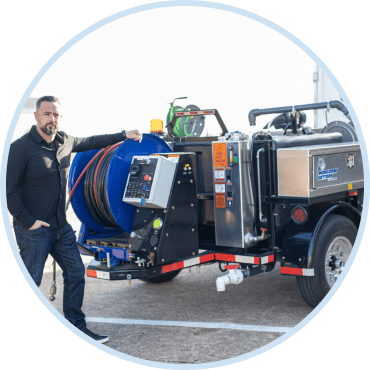
Pure Plumbing handles gas line work across all of Plano and the surrounding North Dallas communities. Gas calls are treated as priority dispatch regardless of time of day.
If you are outside this area, call. We cover a broad footprint and will let you know if we can get to you.
Gas line work is one of the few plumbing categories where there is genuinely no margin for error. A fitting that is 90 percent right is a failed fitting. Pure Plumbing treats every gas job as a zero-defect task, full stop.
We hold Texas plumbing license #M-43576, which covers gas line installation and repair. Every gas job we complete is pressure-tested before we restore service, and we do not hand the job off to the homeowner until the readings confirm everything is tight. That is how it should be done, and it is how we do it every time.


©2026 Pure Plumbing. License: #M-43576.
All Rights Reserved Privacy Policy Terms & Conditions
Get fast, reliable plumbing service from our experienced local team. Call us or use the button to book your appointment!
Available 24/7 - We're ready to help!
We respect your privacy.